How to Cook Salmon in a Pan: 7 Easy Steps to Perfection
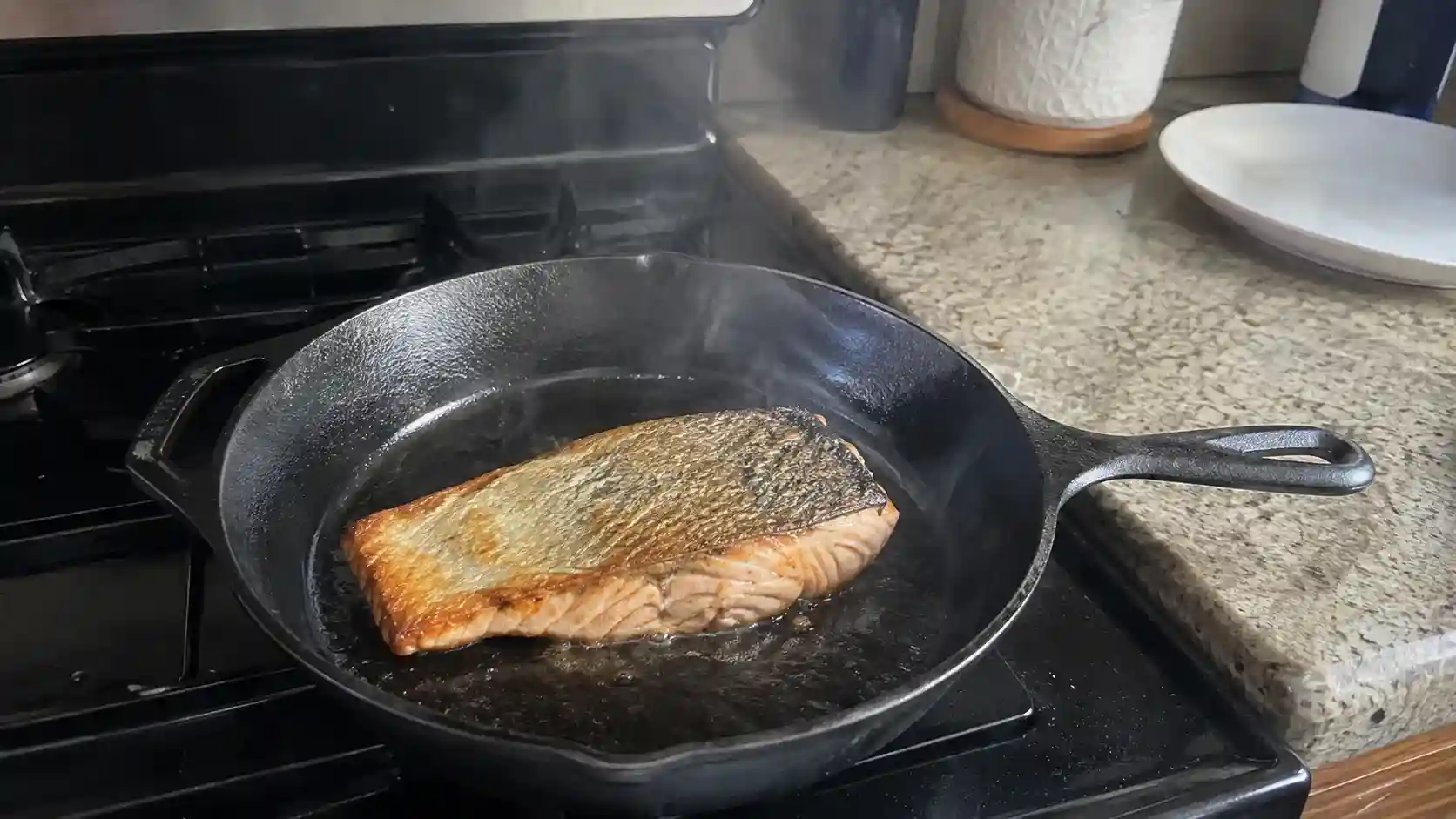
Learning how to cook salmon in a pan is one of those skills that pays off every single week. Once you get the timing and heat right, you’ll have crispy-skinned, tender salmon on the table in under 15 minutes — no oven, no fuss. I’ve made this more times than I can count, on nights when dinner needed to happen fast and on nights when I wanted something that felt a little special. Here’s exactly how I do it.
Table of Contents
What You’ll Need to Cook Salmon in a Pan
This method works with almost any cut of salmon, but it shines with skin-on fillets. Here’s what I typically use for two servings. (all the information is on the card below).
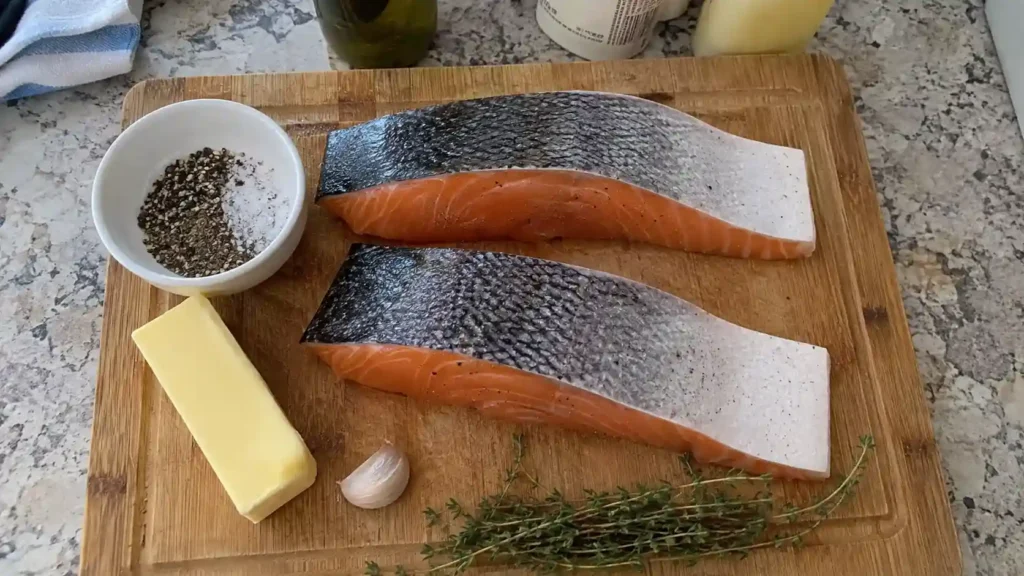
One real-world note: I’ve pan-seared plenty of frozen salmon fillets straight from a hectic weeknight freezer stash. It works, but the fillet needs to be fully thawed first — pat it aggressively dry with paper towels, since frozen fish holds extra moisture that will steam the skin instead of crisping it. Give yourself an extra minute or two of patting and resting time, and you’ll get the same results as fresh.
Prep Before You Cook Salmon in a Pan
Before the pan even gets hot, take the salmon out of the fridge for about 10 minutes so it isn’t ice-cold when it hits the pan — cold-to-hot causes uneven cooking. Pat the skin completely dry with paper towels. This step matters more than any seasoning you’ll add; a damp skin will never crisp properly, no matter how hot your pan is.
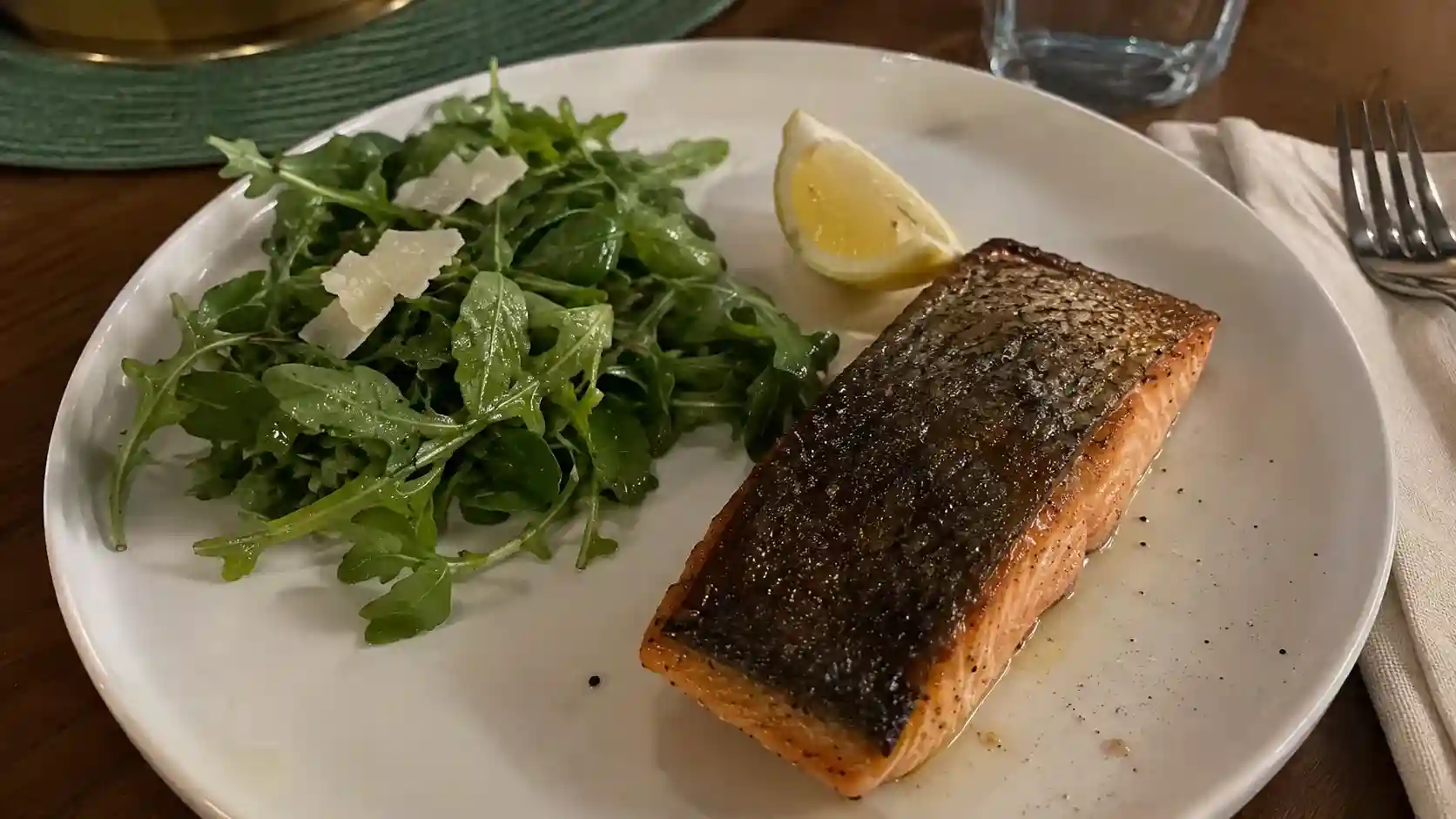
Pan-Seared Salmon
Ingredients
Equipment
Method
- Take the salmon out of the fridge for about 10 minutes, then pat the skin completely dry with paper towels.
- Season both sides generously with salt and pepper right before cooking.
- Heat a heavy skillet over medium-high heat for 2 minutes, then add the oil and swirl until it shimmers.
- Place the salmon skin-side down, pressing gently with a spatula for the first 15 seconds.
- Sear undisturbed for 4–5 minutes without touching it.
- Add the butter, garlic, and thyme, tilting the pan to spoon the melted butter over the fillet.
- Flip once the skin releases easily on its own, and cook the flesh side for 1–2 more minutes.
- Rest the salmon on a plate for 2–3 minutes before serving.
Notes
Season both sides generously with salt and pepper right before cooking, not earlier — salting too far ahead pulls moisture back out of the flesh.
How to Cook Salmon in a Pan: The 7 Steps
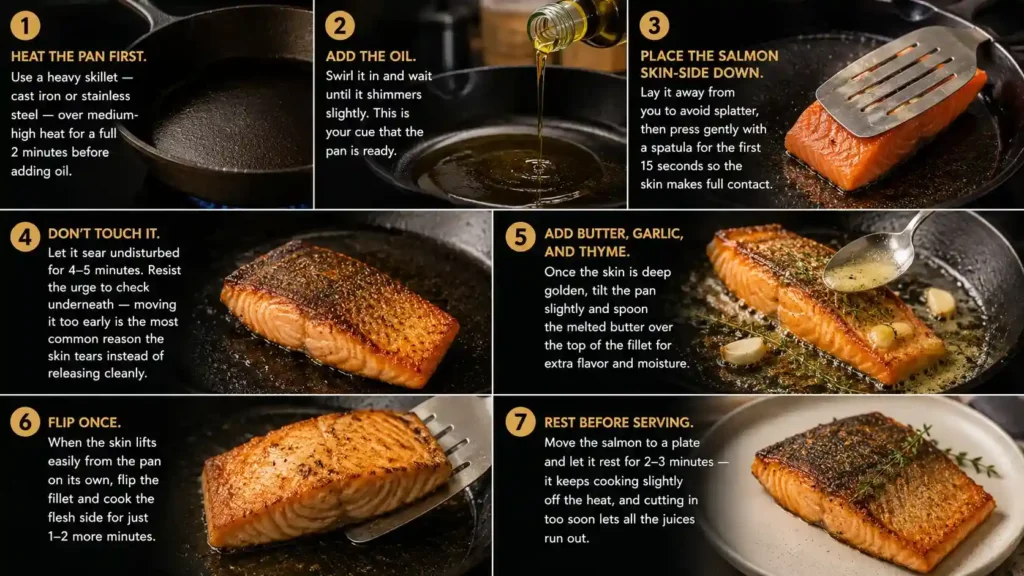
Why Waiting to Flip Matters
The reason patience pays off here comes down to simple food chemistry: proteins in the skin need time to release from the metal surface naturally. Flip too soon, and you’re fighting the pan — the skin sticks and shreds. Wait until it releases on its own, and it comes away clean, crisp, and intact almost every time.
How to Tell When Salmon Is Done Cooking in the Pan
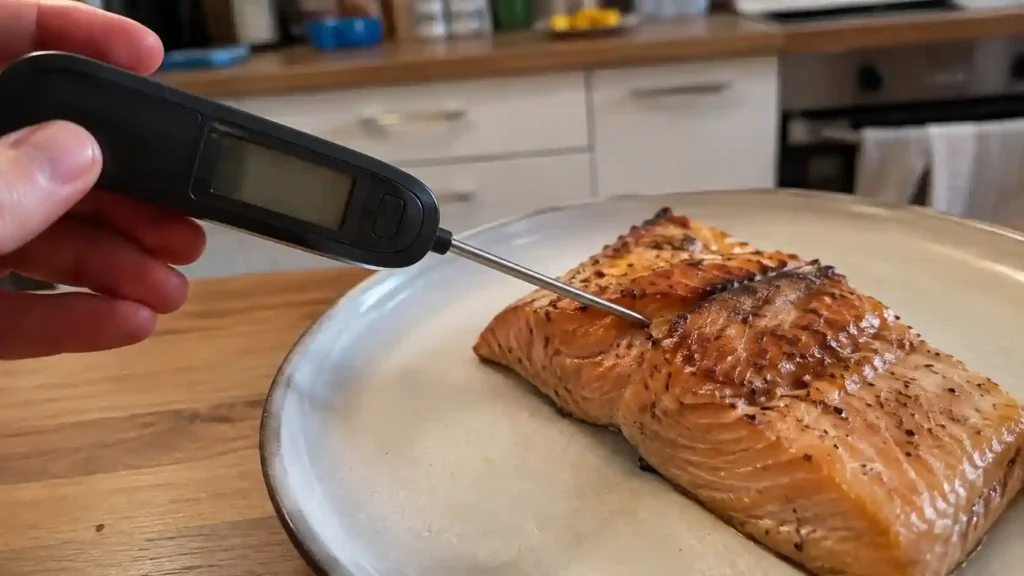
Visually, done salmon turns from translucent to opaque and flakes easily with a fork. But if you want to be precise, an instant-read thermometer inserted into the thickest part should read 125–130°F for medium (my preference, since it stays moist), or 145°F if you prefer it fully cooked through. For an official safety reference, the USDA’s minimum internal temperature guidelines list 145°F as the recommended safe threshold for fish.
Common Mistakes When You Cook Salmon in a Pan
I’ve made every one of these mistakes myself, usually more than once:
- Using a pan that isn’t hot enough. A lukewarm pan is the number one reason salmon skin turns rubbery instead of crisp.
- Overcrowding the pan. Two fillets in a 10-inch skillet is the max — any more and they steam instead of sear.
- Skipping the dry-pat step. Even a small amount of surface moisture will sabotage the crisp skin you’re going for.
- Overcooking. Salmon keeps cooking after it leaves the heat, so pull it slightly earlier than you think you should.
What to Serve With Pan-Seared Salmon
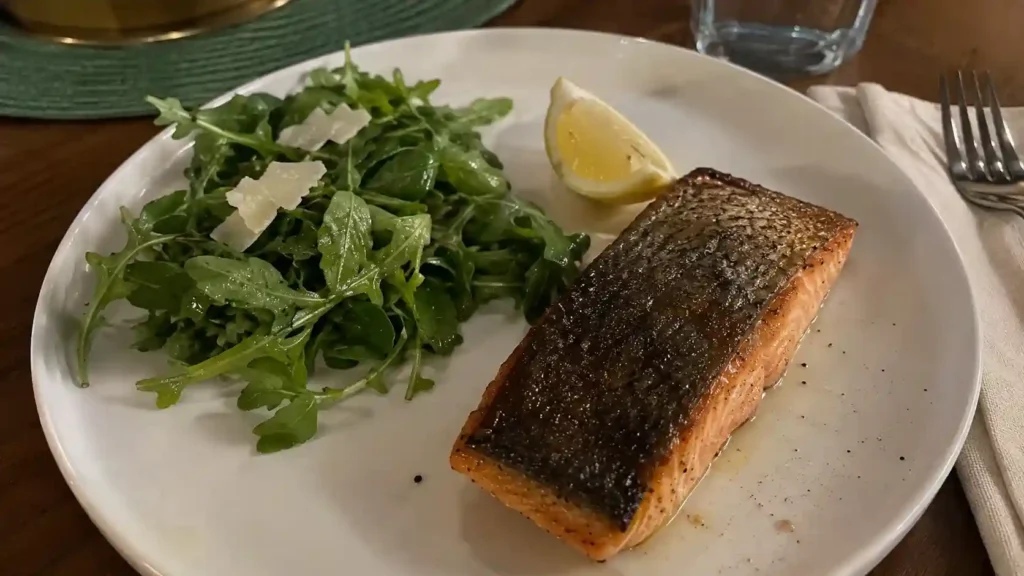
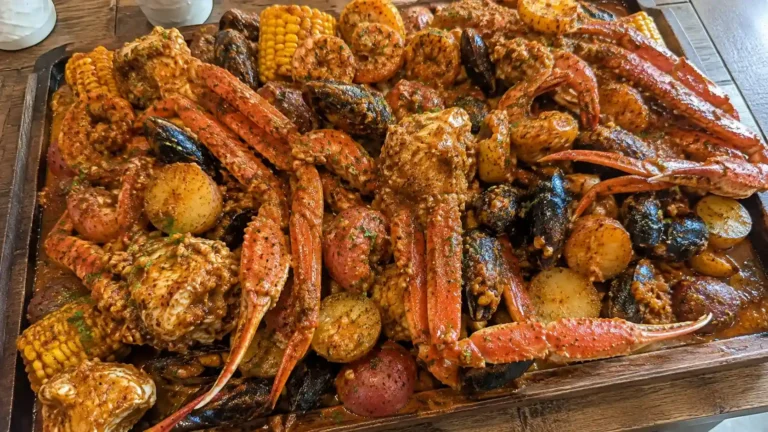
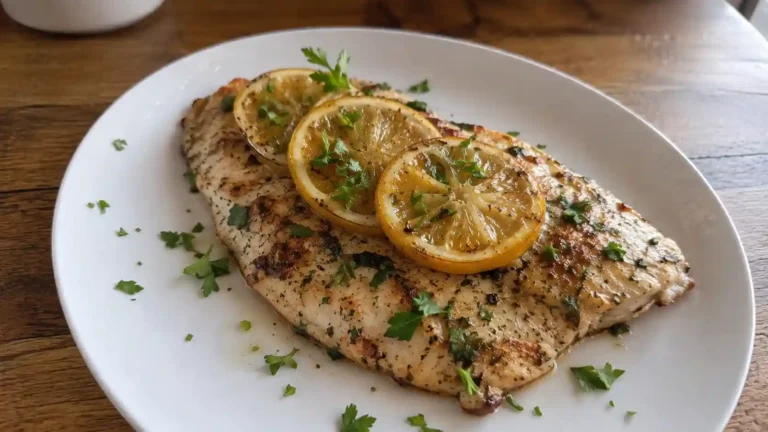
Salmon pairs well with something bright to cut through its richness — a squeeze of lemon, a simple arugula salad, or roasted asparagus all work well. If you’re in the mood for another quick weeknight seafood option using the same technique, try this easy red snapper recipe for another quick weeknight fish dinner. And if you want to put that same skillet to use for something heartier, the same skillet works well for this Cajun seafood boil.
FAQ
What’s the total cook time for pan-seared salmon?
A standard 6-ounce fillet takes about 6–7 minutes total — roughly 4–5 minutes skin-side down and 1–2 minutes on the flesh side.
Do you need oil and butter, or just one?
Oil alone works, but adding butter partway through gives richer flavor and helps with basting. Using both — oil for the high heat, butter for finishing — gives the best result.
Can you cook salmon in a pan without the skin?
Yes, though skinless fillets cook slightly faster and won’t develop that same crispy layer. Reduce the first-side cook time by about a minute.
What causes salmon to stick to the skillet while cooking?
Almost always one of two reasons: the pan wasn’t hot enough before adding the fish, or the fillet was flipped before the skin naturally released.
How do I cook frozen salmon in a pan?
Thaw it fully first, then pat it very dry — frozen fillets hold extra surface moisture that needs extra blotting before searing.
How to Cook Salmon in a Pan: Final Thoughts
Once you’ve cooked salmon in a pan a few times, it stops being a recipe and becomes muscle memory — hot pan, dry skin, patience on the flip. That’s really the whole method. Give these steps a try tonight, and don’t be surprised if it becomes your new go-to weeknight dinner.